



Product Therapy: inside Datasite's transformation from Merrill Corporation
Christian, with Doug Cullen and CPO Thomas Fredell, recounts how a 50-year-old company, Merrill Corporation, was transformed into Datasite, a modern product-led organisation, including the strategies, challenges and stakeholder dynamics involved.
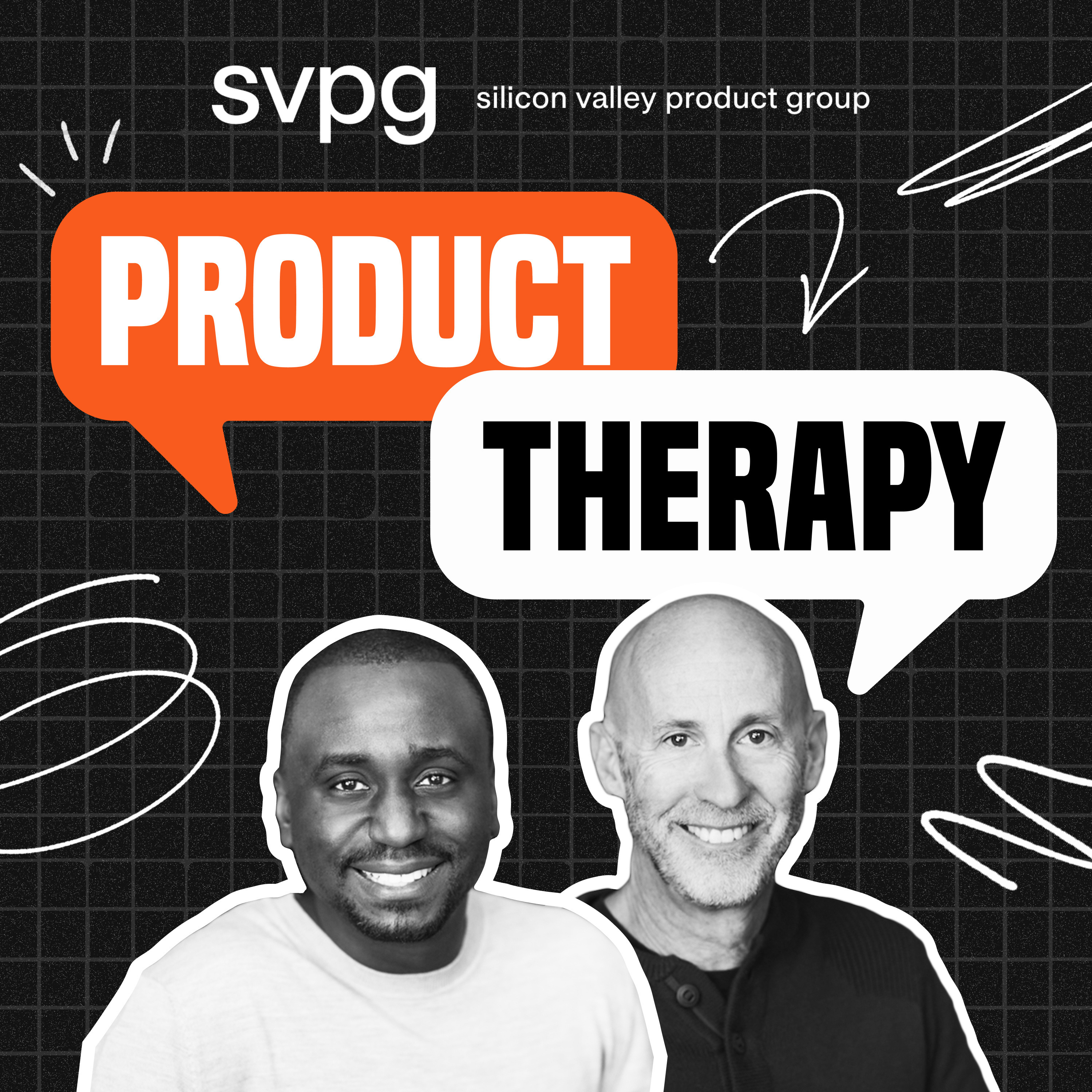
- Traces Datasite's origin as Merrill Corporation and its shift to a product model.
- Datasite CPO Thomas Fredell on the benefits and challenges of the transformation.
The clearest account of how Datasite became a modern platform, useful backstory for buyers.
Today, I am thrilled to welcome Thomas Fidel and Doug Cullen to discuss the inspiring transformation of DealerSite, formerly called Merrill Corporation.
Both Doug and Thomas were key members of the leadership team during this time, and Thomas served as Chief Technology and Product Officer, and Doug served as Head of Sales.
Now, this story is near and dear to my heart because I was also part of the team during this time.
This is really an unfiltered story of how an over 50-year-old sales-led company became a technology company working the product model.
If your organization is on a transformation journey, you really don't want to miss the valuable insights shared today.
Dog, Thomas, welcome to Product Therapy.
Great to be here.
Thanks for having us.
It's fun to be together again.
Indeed.
This is like bringing the band back.
And I'm super excited to be talking to you about this.
We profile the data side story.
, in our book, Transformed.
But I want to be very clear.
We are getting the inside scoop from both of you.
Now, maybe start with the end in mind and maybe judging on the results.
What the heck did you get out of this transformation?
The journey has been pretty amazing.
Transforming is really hard.
And when you get it mostly right, it's really worth it.
We're pushing things at just crazy rates.
So I think from a financial perspective, from a profitability, equity, value creation standpoint, I also think just the people, right?
The people, the teams that we've had.
Look, we're still hanging out and you all left me a while ago.
And many of the original crew that did some of this transformational work are still here.
So I think there's a reason for that, right?
I don't know how two of you still happen to keep your hair.
I mean, I tell people if you go through a transformation, you're either going to get gray hair faster or lose all your hair.
These are signs that you actually did the work.
But Thomas, when you reflect back on this, was it worth it?
Yeah, I mean, look, those first six months were rough.
I was not sleeping that much.
I wasn't seeing family that much.
I mean, it was full on, but it got better and better over time.
And what happens is, you know, as you get empowered teams, you know, you start to see people grow and you start to see them excel and you start to see people surprising you with what they're coming up with.
That's way beyond what you would have come up with.
You know, I've always prided myself in being pretty smart, quick guy.
, which is the most gratifying thing that you can possibly get.
So what I loved about it, I mean, Doug did such an amazing job of describing the impact financially, both revenue, the result the shareholders got, which is absolutely outstanding.
It is the best investment that those shareholders have ever had, and they may never get an investment that performs that well.
The psychological part of it is the joy of winning together.
, the joy of being on a team that wins together, the lessons that you learn about collaboration, the meaning that I take from learning how to be a better collaborator with other people, how to work better with sales, how to enjoy creating trust, what it truly means to foster relationships.
These are the things that they don't fit into a cell on a spreadsheet, but man, they are valuable.
And boy, do they have a impact on your life in a very positive way.
So maybe frame for me the story of you arriving.
, Doug, you joined Merrill Corporation, now data side before Thomas.
What attracted you to the company and what did you see?
I joined Merrill Corporation as the SVT of solution sales in July of 2005.
I actually was targeted by the first global head of sales for Merrill Corporation named Todd Albright.
He and I had worked together previously at a company called Intralinks and he pried me away from a private equity -backed-backed-backed-backed-backed-backed-backed-backed-backed-backed-backed-backed-backed-backed-backed-backed-backed-backed-backed-backed-backed-backed-backed-backed-backed-backed-backed-backed-backed-backed-backed-backed-backed-backed-backed-backed-backed-backed-backed-backed-backed-backed-backed-backed-backed-backed-backed-backed-backed-backed-backed-backed-backed-backed-backed-backed-backed-backed-backed-backed-backed-backed-backed-backed-backed-backed-backed-backed-backed-backed-backed-backed-backed- .
So, Thomas, let's hear your story too, but I want to capture your key observations on the day you landed in the company.
What did you see?
Because when people kind of say we want to transform, there's often this question in my head of like, what's wrong with what you're doing today?
So, I came in through a board member.
I was introduced to Rusty through a fellow named Peter Harrison.
I had worked with Peter before.
He was the CEO of a company where I was the CTO.
Met Rusty, thought that he was fantastic, and bought into his vision of what could be done with Merrill.
.
So the first day I get to Merrill, we're driving, and we keep going and going, and we're not going into the heart of downtown.
We're going to this place called Industrial Park Drive, and we're there, and I'm seeing all these industrial things, and then there's the office, and I'm like, what is this place?
I go into it, and there's this old, like, mustard-colored walls that remind me of, like, maybe a place from the 70s.
If you went into where people worked, this wasn't what you'd think of as, , like the Silicon Valley, like bright workspace.
This was a place where if you were in the middle in the cubicle farm, there was not a single drop of natural light.
So I'll never forget going into the room that they had to do my onboarding because the wall was covered with a bookshelf that I swear was fake books.
It looked exactly like the background for one of those law firm commercials.
The reason why I say that is because it kind of tells a little bit of a story.
It's a little funny, but it's true.
, that this was a very old-fashioned company that had been around in Minneapolis for 50 years, working a certain way.
And I was coming in there as part of really changing the way that that company worked.
When I came in, I'm a product guy.
So I've done it at a startup level.
I've done it at a growth level.
I was also part of the Interlinks journey.
When I was there, I went from $4 million to $150 million revenue.
And then later at IPO, I had my chance to meet Doug there.
I thought he was amazing and was very fortunate to work with him again.
.
When I came into Merrill, there really was no product culture.
So as a matter of fact, what they did is they took part of what was the IT team and they carved it out and they said, hey, Thomas, in your role as chief product officer, this is going to be your team now.
So this was not a team that was delivering the way that a fast-moving company delivers.
This was a team where if they were lucky, they would get a quarterly release and the people in the company were very unhappy about what was happening.
with the product releases.
They felt that the company simply wasn't innovating quickly enough to give, in particular, the sales team, things that would spur their new sales.
Yeah, this is an interesting observation.
And Thomas, you had a very fast chief technology, head of technology, was kind of mostly internal facing in the company.
Doug, you're coming as head of sales.
I kind of want to frame this question as, obviously, Rusty is coming in as a new CEO.
He wants different outcomes.
But if I was kind of asking, what was the real, to change.
Why now?
I believe it's a lot about the people, right?
So the leadership, the people, and that desire and willingness to change.
Rusty identified an opportunity that he felt that there was a crown jewel within the Merrill Corporation portfolio that was DataSite.
DataSite existed, existed for a long time.
It was a highly trusted and valued software platform for doing diligence online.
But that was one of many parts of Merrill Corporation.
I think at the time there was something like , like, 11 different operating divisions.
And what Rusty expressed to me during the interview was that he saw the opportunity to basically do divestitures and sell off those parts of the company.
And what he was trying to achieve with that, or what we were trying to achieve with it, was really a, as I said, more of a moving from a people-oriented, lower-margin set of businesses that had been acquired and bundled together into a more streamlined, for capital markets and platform in the sense that, you know, Google is a platform or Microsoft is a platform or Meta is a platform today.
And so he really saw this as an opportunity to take what we had, which is an incredible brand, a trusted brand, and build a connected series of applications to solve various problems throughout that capital markets deal making space.
, and ultimately transformed to be a much bigger software-oriented equity-value creative platform.
And so it was selling off a translations business, selling off a legal technology services business.
It was selling off a business that made tchotchkes, like you would go to a business.
I mean, they had really bought a series of these court-reporting business.
.
And at the end, we felt that there was a really solid foundation to build something.
But it really took, I think, Rusty's vision.
And then ultimately, the team that came together, which, you know, partially was where, from a technology standpoint, began when Thomas came on board.
Thomas and I only overlapped for like a year, but we had a great mutual respect for each other, a bunch of people that we both value that rate each other highly.
And my response was, that's the type of leader that I think we need to get things going here at DataSite.
, but as a very tightly aligned set of leaders that believed in the right way to build a business and the way to run a company.
I love this.
And I want to summarize our frame because Thomas actually brought me in to consult with DataSite to kind of do an assessment of where you were on your product journey and where those gaps were.
And, you know, I was kind of looking through my notes of my very first, and I spent time interviewing many leaders in the company, trying to discern where the company was.
, and this was an over 50-year-old company, probably described as service-oriented, like services-based company, people-centric in their services, relationship-based, very sales- and service-led in terms of how decisions were made, what problems or direction or what directed the activities people did were driven by demands of customers interpreted by sales and service in the company.
.
And with customers, high amount of trust in the service organization.
.
So very quickly, it was clear that there were significant things that had to change in how the company builds the infrastructure, the architecture, the technology it used.
There were clear changes in the people.
You were solving problems through big projects that were funded top-down and big bang.
And like I mentioned before, a lot of things were reactions to customer needs or top-down or outside-in.
So I could understand why they needed a technology leader.
They kind of brought in Thomas.
, you are now brought in as the very first time the company is having a product leader, a technology leader.
You see what some people might call a lot of opportunity, but also a lot of things that are broken.
Thomas, let's start with you.
, where did you start?
What were the first things you needed to do on this journey?
First thing, understand the people, get to know the people, go deep.
So I spent a lot of time based in Austin, Texas and headquarters for Merrill, now DataSite, was in Minneapolis.
So I was traveling up to Minneapolis, spending a lot of time there getting to know people and really getting an assessment of who it was that I had in place.
And what I realized was that I just didn't have people that had done product before.
And the way I usually think about it is, .
Can I coach these people to become great product people?
Because I think sometimes it makes a lot of sense to make an investment of people in order to bring them up to the point that they can be great product people.
Unfortunately, in this situation, I really didn't have that time.
So Rusty had been very successful in getting the board to commit to a very significant investment in building technology.
And Rusty was fantastic about just saying, hey, tell us, run with this.
So you come up with a vision.
You come up with a way that we're going to do this.
And Merrill had done everything.
, kind of a very old fashioned way before.
So I remember way back when Doug and I were both at Interlinks, they came out with a product that looked like a very familiar piece of technology.
Back in the day, it looked like an early version of Microsoft Outlook.
And at first it was kind of like, oh my gosh, like this is something that's familiar.
People understand this.
Like this is like a true competitive threat for us.
But they came out with that and then they didn't change anything.
So from my vantage point outside of the company, what I saw is them come on strong, but then no came for building on this and for continuing to innovate and deliver.
So what had happened is they had built this very monolithic technology and they did not build a great product discipline within the company with great product people.
So candidly, I remember coming back and talking to my wife about the changes I had to make organizationally.
And I got some good insight from a person that had been a consultant for me before our team really started hopping.
And they said, hey, you know, you should consider wiping out the management layer.
.
And I did that.
And it was terrifying.
I wiped them out.
And I started from scratch in terms of the management.
There were people in the organization that were good, that had the potential to be great product managers, to be a great designer, to be a great architect, to be a great engineer.
But the people at the top did not understand what they were doing and did not empower them.
So I knew where I wanted to go was, candidly, a modular organization with squads, groups of people that could be empowered.
for building product.
And then based on having built a lot of technology platforms over time, what I realized is that if you can also make your platform modular as well.
So in a sense, both the platform and the people kind of, in a way, mimic each other in the way that they're modular.
So if you do those two things, and if you create a lot of focus on the customer, you have a tendency to win.
There were a lot of challenges along the way.
I'll never forget my first board meeting.
.
I got a call later from the guy who had been sort of the original chief product officer and had built up the M&A part of the business.
I remember him saying to me, you know, I told him you were the right guy for the job.
I was like, wow, how close a call did I have?
People don't usually talk about their near misses, you know, and the ups and downs, but it was a tough situation to come into.
In our European sales team, we had some , very talented people.
And I remember the first time I met our two key sales leaders there, they sat me down and they told me how terrible the product organization was.
And they didn't say this with the whole mindset of like, hey, we think you're going to change everything.
They said it more from the perspective of, oh, you're the latest joker who's going to take a whack at this.
And good luck.
It wasn't exactly like everyone was kind of looking at this necessarily with open arms.
At the top, Rusty had the vision.
He got the board to buy into the money.
and enable people to create a new platform.
And having supportive people on the sales side, Doug in particular, was incredibly helpful to maintain momentum and excitement, even when there's not really a lot to show in the early days when you're building organization and you're building platform.
Thomas, I have two quick follow-up questions before I get to Doug here.
First, you kind of mentioned Rusty, he was the CEO at this time, got the board to make a significant investment in technology, in infrastructure, .
So if you think about the value of a company, you can often look at the value of a company as being some of its parts, but you may look at each part individually.
The typical rule of thumb is that for technology-based businesses, they have a much higher valuation than an equivalent revenue service-based business.
.
If you looked at the portfolio of businesses that Merrill had, candidly, I think Rusty was very clever at looking at, hey, what is our strategic position with each element of this portfolio?
So, for example, one of the biggest and actually the longest part of the portfolio, what was called the financial print business, had been disrupted.
And candidly, it had been disrupted by a product model company.
Because a company called Workiva, that happened to be coached by Marty Kagan, came in with .
So what had worked in the past, we're going to rent conference rooms.
We're going to put a bunch of people in there.
We're not going to let them out until this regulatory document is done.
It's super important.
Had been replaced by collaborative technology that allowed people to work together across time and space.
And that was thanks to the founders of Workiva and Marty's help along the way.
So I think what Rusty did is he looked at the business and he said, hey, there is a software service play here.
, as Dex said, if we can eliminate the old parts of the business, get rid of that drag and become very focused, we can create value.
And that's exactly what Rusty executed on.
So that investment was really used to, at the end of the day, create an incredible, the highest return that the investors had had at that point in time.
I like that a lot because you're calling out the excitement of the potential rewards of transformation, you know, going to a bot and saying, , we become a technology company.
We can increase our return of shareholder, increase our valuation.
That if we were a service-based business.
Okay, so I like this a lot.
Second question, and Doug, I'm coming to you here.
You talked about wiping out your management team and restarting this again.
This requires a whole amount of courage.
What drove that courage?
Oh, that's such a good question.
You know, I think early on in my career, I started a business, which took a lot of courage to do that.
I sold it to Intralinks.
came on board when Interlinks had zero technology people.
I built the team up from there.
And something I learned along the way, which I would say to my kids, is challenges will always come up.
And the best thing to do is to take this mindset of somebody has to solve this challenge.
So why not me?
And I think about that with humility.
I don't think I have to solve that challenge alone.
But I think, hey, I can put a leadership plan forward.
I can get the momentum going.
And then if I'm good about enlisting, you know, the greatness and talented people that I work with, then we can win together as a team.
So if you boil it all down, all I really care about was winning as a team.
I don't consider myself to be that important in the journey.
I think about the team as the most important thing in the journey.
So, you know, having Rusty, having your CFO who, you know, at times was a gruff and, you know, sort of difficult to work with CFO, but a very smart guy that I value very much, Doug, if you can get help from the people around you, then that helps you to be bold in terms of your .
Because you realize you don't have to go it alone.
If you're winning together, that's the thing that matters.
All right.
So, Doug, I want to play the other side of this because as an organization, like I kind of mentioned, in some ways, this was a self-led organizational culture.
You are hearing your CEO say, we're going to give a lot of money to another group.
We're going to carve out part of the organization.
We're going to empower them.
Empower them to go make us a tech company.
Maybe give a lens at that point in time.
What was the reaction of the self .
How did they gain the trust of the product team or the product team gain their trust?
What were some of the questions, concerns?
What were you all thinking about the transformation or objections you may have had?
Again, sort of with Merrill Corporation at the time, it was sort of multiple by-load sales organizations or parts that were collaborating, but some were completely distinct and never working together.
Others were kind of more closely coupled in terms of hovering the opportunity from a customer perspective.
I reflect, which I ended up taking over.
In my instance, I came on board, got a chance to assess the talent that DataSite had across the senior leadership, and it was excellent.
I didn't really have to, nor did I feel, you know, most people come in as a sales leader into a new business, and I would say 80% of people have to do what Thomas had ended up having to do in technology, right?
And I always get inspired by Jim Collins' book.
He sort of says, you know, good to great is like, you get the right people on the bus, you get the wrong people off the bus, and then you , figure out where you're going.
And for me, I had a lot of the right people.
They just had not necessarily been empowered or enabled or set up for success.
A lot of individual, highly competent sellers, but had become sort of born out of a financial print model, which was more of like, I have a big book of business, right?
I cover all these companies and not a scaled selling organization, right?
Which is a little bit different.
You know, I had .
goes to product, that's one less dollar I have to do T&E with my client base, which became super personal for a lot of the salespeople.
And their heartfelt belief was, I would do better with that dollar than the product team will be.
And so there was just a lot of kind of tension that existed among the teams in terms of like, how do you spend dollars?
What do those go for?
And thankfully, I think most of the team that I was a part of were trying to keep , right?
And wanting to say like, look, this can be done.
We know this market.
This is still an area where we can deliver new quality based upon our deep and rich customer understanding and the understanding of these problems.
So then it just became, how do we collectively do that together?
So it was really breaking down these existing silos.
It's not sales versus marketing versus service versus product, you know, versus finance versus this.
It was more, hey, it takes a village.
to do this really well.
So let's kind of come together.
Sometimes hook or crook, right?
The culture became how do we break down this us versus them and really become win together, which is one of the thematics that the product team really brought, I think.
And that's a little bit leader goes first, right?
So how do we how do we formulate those teams?
How do we help inspire them to not hate each other or not figure out that they're fighting against each other and, you know, come together to ultimately, like deliver this beyond just the technical transformation.
It's really that company and economic value creation transformation that ultimately came together.
It was not always pretty.
We certainly got there with a lot of blood, sweat and tears of various leaders.
Do you mind if I comment on that?
Because there are just some things that are really spurs.
The first thing is we're talking about talent.
We're talking about teams.
And when I came in, you know, I didn't have that talent.
So I was very fortunate to tap into to two friends and two people that I had amazing experience with so I was able to pull in Christian and a fellow named Jeremiah Ivan and that gave me two critical pieces of the equation with Christian I had that deep product management knowledge and just the general entrepreneurial mindset and incredible people skills with Jeremiah I also had an entrepreneurial mindset but a guy who was really a titan in terms of getting people to understand technology and with lots of clarity so the thing is coming in I knew hey we needed a good structure .
So we went with a trio, you know, sort of the typical product operating model type of thing, product manager, designer, engineer.
But I give Christian and Tug, you immense credit for coming up with the whole extended Troika idea and pulling in like sales management and service management when needed.
Because I remember we're going through this process.
We're going through this kind of long build.
We're building a whole platform.
And it's hard to say, hey, like really figuring out what an MVP was was difficult because we had these .
Yeah.
Saying it pointedly.
.
A good product manager has a deep understanding of the customer, the business, the industry, their products, their data in that way.
In a transformation, we kind of talk about the clock is ticking.
We are building the plane as we are flying.
There is nobody you could hire that on day one has a deep understanding of your business and your industry.
And we don't have the time to teach them.
So, you know, in one way or the other, we were creating a strong product management discipline by bringing in the experts and the domain experts on the industry and the business.
to accelerate this.
You know, as you guys are describing this, I don't want to lose out on something that allowed this to work, which was the building of trust.
Because Doug kind of talked about we moved from us versus them to kind of thinking together as one team.
You know, the two things I always share with people when I tell this story, I say, you know, when I even started, I spent a lot of time with Doug.
I actually went in very public to people that I was learning from Doug.
I'm sure Doug did not even notice at this time, he knows the industry well, he was respected by people, that he knew the business.
I would spend a lot of time with sales because I recognized coming in, I had no right to tell the organization what problems they should solve or how they should solve problems because it's very clear you have no competence in the industry or the business.
But what you have to do is people have to see you learn and the people that are teaching you have to know that they are teaching you and then you have to keep learning after them.
and lead a company is because they are meant to be the closest to the customer.
And they are learning continuously.
But we were not.
The product organization was not the expert on the customer.
The salespeople were.
I always tell the story of, you know, early on, I'm like in the company.
Doug calls me up.
He's probably like late in the evening.
And he's having a sales meeting.
And he says, dude, you need to get on a plane and come to New York.
I'm like, is everything okay?
It's like my leaders are here.
We're riffing on this product thing and transformation.
You know, and I'm like, okay.
So I get on a plane and I think I should be preparing on the for I'm gonna explain the work we're gonna do in product the changes we're gonna do I'm preparing my mind on all of the talk track and I get in dog pulls me into this small room they're like two sales leaders these guys don't talk about anything related to the company or the business they're like dude how are you where are you from how are your kids we talk life and family in there and I'm like you know I'm waiting for the big got you like ask a hard question that I can know you don't know anything about what you're doing and they kind of finish and then they go back and join the group and I heard this sales leader talk to this other leader and he's like, oh man, yeah, this guy is cool, man, it's okay.
And it's almost like there is a fundamental trust in a transformation, which is forget the process, forget, do I trust you enough and your intention that I am willing to even give you a chance to fail, you know, give you an opportunity to try.
I kind of want to call out this because I don't want people to feel like building of the trust happens magically by product going to sales and say, trust us, , it's earned.
And it has to be renewed almost every day by your actions.
Kind of like, okay, we gave you a shot.
Did you deliver?
And Doug, it wasn't always that pretty.
Maybe you recall some stories or instances where Product Ida lost the trust of sales and we had to renew them, or when there were expectations not met on this journey.
But maybe share more if anything comes to mind about how we change how we work together.
We move from sequence, top-down, handoffs, together.
It wasn't always organic.
It wasn't natural room with service.
You know, I did things that come to mind about how that journey happened.
Yeah, I mean, look, just a couple riffs on those points.
I mean, one was, yeah, Thomas brought you guys in, you know, you and Jeremiah.
You know, I remember meeting you both for the first time at a bar in Loring Park, which I had no idea where Loring Park was.
And, you know, we sat down and we broke bread for the first time.
And then it sort of comes to the normal time of the evening where you're , you sort of start to go to break.
And dear Jeremiah, you know, says, says, hey, look, why don't you guys come back to my house?
And he grabbed the to-go salad for his wife.
And I think we're actually all about the same age.
I think we're all like 74, 75, 73 babies.
And we barely know this guy.
I barely know you.
We had met for the first time.
Obviously, I knew Thomas, but Thomas and I didn't like work super intimately together at Interlinks.
But we then just kind of went up to his apartment and opened the door.
And I met his wife and he hands her a salad.
me their cat.
So I'm walking with their cat and I have no idea why I'm walking with said cat.
We'd have to edit parts of the evening in terms of what happened.
But that was sort of the formation of the kind of little unit that ended to be how we, I think, drove a lot of the transformation.
And then it became trust built through, hey, I've spent some time with this person, good person.
We have a lot of in common.
We all have the same goals.
And then each kind of chain, if you will, is a new relationship.
, and that gets stronger and stronger.
Then you start to have these relationships that come together, their trust, and that allows you to get through the inevitably difficult times.
I will tell you the most difficult time, because I almost remember it as if it were yesterday.
But as Metagen, we built a new platform.
And our platform, by the way, did M&A deal.
Like, this is not a normal MVP situation, right?
You can't not get it right when you do a deal.
Inevitably, you have to on the new platform on the first deal.
And so we, you know, begrudgingly picked a deal in Ireland.
It's for a large energy customer that had worked with us through a lot of different transformation.
And this became the first data site one project.
And that's what we called the new platform.
And so before I put this on, I call up Christian and I'm like, hey, man, you're telling me this thing is ready.
And he's like, yes, it is ready.
And I'm like, are we sure it's ready?
And he's like, yes, it's ready.
It's ready.
And I'm like, great.
So I call up a woman by the name of Holly Arts, who runs our customer service organization.
And Holly, I'm like, Holly, I need you to be the project manager for this.
I know you haven't been the project manager, but I'm really nervous about this.
This is like our first inaugural mission.
And it feels like we're flying to the moon.
It's not like, you know, we're just flying up and letting it down.
Super high stakes environment.
And we all kind of hold hands and we roll this thing out and it's for a financing deal.
So is a relatively low bar for a capital markets transaction.
So not a full on asset sale.
Next thing I know, I'm sitting walking down.
I get a call from the sales rep in that covers the Irish bank.
And he's like, I just got off the phone.
And let's just say I've learned a whole bunch of new words from my Irish customer about how not only is this platform not ready, but this platform is nowhere near ready.
And so we put everything into this thing.
, we kind of fall on our face.
I mean, candidly, it was a big like bucket of cold water dumped on our head.
We thought it would be kind of good enough.
We hoped it would be good enough.
And it wasn't.
And the customer was the judge.
I mean, ultimately, no matter what we do, we have to put it in the mind to the customer.
And the customer said, not only is it not ready, it's nowhere effing near ready.
And that was really tough to hear.
You know, I felt horrible.
I felt like I was sort of , you know, internally, externally, are we ever going to get there?
And I think ultimately, I phoned you guys up, and we got together, and it was sort of like, okay, what are we going to do?
I mean, literally, I think within a month, we told the whole company together, or a big part of it, we met at the Lowe's Hotel in downtown Minneapolis, and we sat there for like three straight days going through, what do we need to do to get this thing launched?
That was in July, we went product live, , October 9th of that same year.
And that was a little bit of a woodshed moment.
Like, you never know if it's going to come together.
And I don't think any of those people have been in that room together ever.
And we came together and it was like, we got to get this done.
It was not the most friendly.
It was not the most amicable, but we came together.
And I think a lot of it was because we were okay to keep going.
Many companies, I think, honestly, would have folded up the freaking tent and been like, we can't pull this off.
I'm sometimes amazed we didn't, right?
But we kept it going and the teams were willing.
I have another colleague that sort of talks about the culture bank, right?
And you put funds in the culture bank.
And so then sometimes you have to withdraw funds from the culture bank.
And this was a withdrawal funds from the culture bank moment.
And thankfully, we had put a lot in there.
experience.
as a critical step on the journey.
No, I love that a lot.
And I love your framing.
And I think it's important for every transformation to reinforce that, which is you have to have something in the culture bank if you're going to take something out.
And it's almost like a transformation is this constant test and renewal of trust or what do you have in your culture bank?
And, you know, you kind of talked about how we built up enough trust to even start because many companies are so afraid of taking that first step or putting something on.
because of what happens when things break.
You know, they don't have anything in the culture bank to make a redrawl if something breaks.
And you're kind of establishing we had enough to pull us together.
And maybe that break actually forced the issue of us coming together.
But I think it's important to know that I don't think till today the culture has stopped coming together.
You know, it's almost like there were sales and product locking themselves in a building for three days to build a product together.
And the company did not ever stop.
.
I think it's like many companies have spikes of greatness where they like transform for a moment to rise to come to a threat.
You know, got to work together and then they go right back to the way things have always been afterwards.
But I almost see that story as a narration of probably the first cultural transformation change moving from an us versus them.
There was a forcing event, but it became what the company is today.
It's like one company, sales and product.
They solve problems together as one team.
I love that a lot.
.
So we're really thinking about it as a modular approach.
Everything was all about modular.
The things that could be scaled up, things that could be divided across teams.
And the way that you do that today, the best way I think to do that is through microservices.
So our entire plan became, hey, how do we build this platform using microservices?
And then when we're doing that, we're thinking, hey, how can we build .
That was really the biggest sort of technology architecture changing lens because everything had been done in a monolithic way.
It was all done using relational databases.
So everything was like Oracle database and a big, big, chunky app.
And bringing in Jeremiah and leveraging some of the good architecture talent.
We had a guy named Ashish Pagay, who later became sort of my R&D guy and the first AI lead data set.
.
So we thought about, hey, what way can we do this?
We found a company called Pivotal that created something called Pivotal Cloud Foundry, which at the time was sort of like training wheels for microservices.
So took care of a lot of the challenges associated with building a microservice architecture.
Because what you're doing when you're building with microservices is you're not just building an app.
You're creating a whole modular infrastructure.
You're creating APIs.
And that is the thing that you end up building on time and time again.
And we're changing databases.
, the fellow that started a tech company around Minneapolis.
So he came on board and he was really instrumental in terms of mentoring and teaching people how to use this MongoDB as we went.
So the organization structure paralleled the technology infrastructure and Pivotal Cloud Foundry became kind of like our easy way of getting into a cloud environment with microservices.
Like it was a real transformation because Merrill in Minnesota, had been viewed as, hey, that junky old company out on Energy Park Drive.
And with all this stuff going on with Pivotal, we ended up doing a whole bunch of marketing initiatives with them, where they were talking about the most important company you've never heard being now Datasite.
And it was fantastic because, one, it both reflected the fact that we were a great poster child for their technology and their help in our transformation.
And two, it really helped us to create awareness amongst tech people.
ourself from being this sort of also ran not a very interesting company to work for to become like one of the best companies to work for in Minneapolis which was very gratifying when that happened because when you're trying to pull in talent and your reputation as like an old stodgy company that's not really moving that quickly it's hard to pull in talent and candidly when you've got people with big personalities like you know Christian yourself and Jeremiah it's very helpful because you know where the company can't necessarily promise , the innovation, what people can get is that promise of, hey, I'm going to work with fantastic, innovative people.
So that allowed us, even before we really had a brand that supported us as an innovator, having the right people allowed us to pull in the talent that we needed to create that transformation.
It was really a complete change in how we built software, how we deployed software.
The old cadence for delivering software was delivering once a quarter at max.
By the time that I left Datasite, Datasite was deploying changes, , like 20 times a day, all seamlessly with no customer impact whatsoever.
So it was a huge change.
And this was all in the context of, you know, probably the biggest and most important change that we made is incorporating customer engagement and discovery into what we did.
And I would also credit that for being one of the things behind creating trust with a sales and service team.
When you go from a product team with no customer engagement to a product team that's talking to the customers all the time, , you know, now you're sharing stories with your peers and you're collaborating together and people realize, hey, you've got the right lens on what the customer cares about as opposed to, hey, you're just tech folks.
You don't care about the customer, which happens at many companies that are feature factories because they simply don't have that type of engagement.
I remember talking with a chief revenue officer, Todd, at that point about, you know, and he was kind of questioning the time product people have to spin with sales and discoveries like sales.
We know the customer, man.
We understand the business.
We can just tell you what to do.
And he said, you know, , I'll go with you to go meet a customer.
And I remember the first meeting we had with the customer, I could just see him looking at me suspiciously at the corner like, okay, what kinds of questions that is.
And we come out of the meeting, he's like, all right, we'll go to the second customer meeting.
He just kind of had this disappointment like this is what discovery is.
And we're in the middle of the second meeting, we're talking to the customer and he just like hits his head on the table like, okay.
And he's like, please, carry on, carry on.
I'm like, okay.
So we finish going, we come out of the meeting and he's like, dude, you know, in the first meeting, I was like, man, people are clueless, man.
Actually, like very simple, dumb questions we all know the answer to.
But by the second meeting, man, you went like a whole level deeper.
I could now kind of understand you were validating things.
The first customer said in the second meeting, and I'm thinking to myself, man, if every product person understands this, we will have better products.
He didn't understand the customer this way.
And he championed an early product tour where, you know, it's like, you got to go to every office.
He called all those sales leaders and said, hey, you've got to welcome .
I mean, these are the little things in transformation stories that people don't talk about.
There's a trust in the journey of transformation in winning hearts and minds of key leaders that you have to continuously do.
But it's reinforced because the product teams have to demonstrate a good knowledge of your customer and business to continue to end the trust.
Yeah, that was certainly a new muscle for us.
I joked it.
You know, at some point, discovery almost became a dirty word.
We're using it so many times and so few people really understood.
it.
And what I believe is as important as anything to running a great product company is you've got to be able to do really good customer discovery.
And you've got to make that go to work for you.
Like, in other words, it's easy to go and meet with the customers.
And that is what I think the previous experience with product teams had been at Merrill Corporation.
It was like, you come to town, you do a bunch of meetings, you ask a bunch of questions, you find out a bunch of stuff, and then you just go back and do whatever the hell you want to do anyway.
.
And so that next level muscle is probably what I think separates good product companies from great product companies because some companies will get the discovery muscle.
But how do you take those insights, bring them back into the complex organization that is a modern product and technology org?
How do you prioritize that?
How do you bake it out into appropriate sprints?
some sets of customers, you know, based upon feature flagging and or availability to different cohorts in order to learn early but not overexpose it so that you can hit that magical rhythm of getting the customer discovery, hearing the impact and the pain, and then delivering with that.
Because the magic moment is when we get to go back to the customers and say, hey, look what we have now.
This is only existing because of meetings with people like you.
, I mean, what better joy exists in the world than running product teams that do that?
Like, that's when you're winning, right?
When you sort of get that full circle realized into your, you know, your CICD and just kind of make that type of magic happen.
That's the best.
And it's super hard.
It is super hard, but you called out what better feeling than having a product team that can solve a problem for a customer.
Because, you know, often people will joke, well, you can't talk to customers.
It's a waste of time.
Some people are too busy.
But I said, .
If you have a product team that can deliver on solving a problem, sales loves that.
Customers love that.
I do want to make sure I shift a lot to how we decided what to do because historically, I mean, this is a project-based company.
I remember when I came in, there was this release one, release two, release three, big drop-down, big project, and there was not a clear vision of what the company wanted to do for the product.
There was not even a clear strategy of how.
.
So there was a very reactive culture.
Maybe say a little more about context changes like product vision, strategy, focus, how the company came to a place where it was less reacting to threats in the market and more proactive with this is where we're going to go, we know how.
When we talk about this, one of the things that really strikes me is that when you are a company that's doing great customer discovery, if you've got the execution engine behind you as well, is.
It doesn't really matter what the competitors do.
Because if your competitors aren't matching your level of insight, then they're not going to be matching the level of value that you create.
So as we were going through this journey, I looked at our competitors as like, hey, I know they're going to copy us, but they're just going to copy us late and worse and not integrated.
It all fits into where are you going?
What's the big picture?
What do you want to be for your customers?
Say three to five years out, what problems do you want to solve?
Getting there and getting to that mindset was really a totally collaborative exercise.
The point of view that I came in with, I'd been around the M&A space for a while, so I had a sense of how things had played out in the past.
But I also had amazing, smart people that I worked with, like Rusty, our CEO, who had a point of view about things, Doug, Christian.
And, you know, what kind of started to take shape, I looked at it really as something that kind of emerged out of a lot of collaborative conversations, was this M&A lifecycle solution.
So we had built a platform, and we had one piece of the M&A lifecycle, this specific piece, .
Very important piece, making your decision on the M&A deal as part of the due diligence piece.
Nothing is more expensive than an M&A deal.
It is the most expensive thing that can be done.
So the stakes are high when you're making a decision.
So we had a great place that we were starting from.
But then the question became, hey, what is it that we can become?
And the idea was we can become this solution that handles every single part of the M&A lifecycle that will take you through an M&A to the point that you're integrated, , that you're operating really well, to the point that maybe you're starting to look at other companies that you're going to buy, or to a point that maybe there's time to realize the value that's been created in you, to the point that you're getting ready for diligence, to the point that you're doing diligence again.
So that was the short synopsis of the vision for the M&A lifecycle.
And then the strategy was, how do we go earlier in the M&A lifecycle?
So how do we get involved and start adding value and start solving customer problems You get to the point of diligence.
So we're in there and we're working with them early.
And I think many people take for granted what shifts have to happen in a company.
Because when you have a project company, you're dependent on roadmaps.
You're dependent on dates.
People want to know what's coming next.
And when you start to work in a product model, you're challenging people to think a longer term of like, these are the problems we're going to solve for these people.
And they are like these big things that will require us solving, building many things.
is, you're kind of saying, we don't know all the little things we have to build, but we do know the kind of world we want to create.
We want to be in a life cycle, help people make better decisions, help people process a deal, maybe help people on the board level.
And this has been fantastic to see the company leave out that vision.
I tried to frame where the journey began and where the journey is today, and we just caught the last 10 years of the journey, not thinking of a company that was over 50 years old when we all joined the company, but you're moving from .
You're moving from a service company to a tech company.
You're attracting talent, a great place to work, employee satisfaction, the culture of empowered teams.
You know, Doug kind of called out what I always call true agility.
You know, you're like, you can compete.
Companies acquiring other companies in the space.
The company is becoming, you know, tightened on its own.
It's creating a different identity in the Midwest of a true technology company.
today, don't see or understand the journey that led to what it became.
They'll be like, yeah, of course, I joined a tech company.
It's a cool company in Minneapolis.
I'm like, you know, if you play the tape just a while, it wasn't that.
I cannot say enough about you all called a lot of the human element of it, the humanity of the work that has to happen to do it.
What would be your biggest advice for anybody going through this journey?
You know, if I'm like, look, I'm a leader.
I just joined a company.
I want to transform the company.
You know, what would be your biggest advice?
.
my home, you know, and Todd did that.
He hosted every sales leader at his childhood home in Cleveland, Ohio within three weeks of me joining the company.
And I still remember that to this date, right?
What better way to build, you know, trust and invite people in your house?
I've stayed at Thomas's house.
You know, it's like there's just something about this type of journey that I would really emphasize the human connection and collaboration.
And, you know, and I'll add a little bit to a little bit like differently minded.
people, people that have different experiences, different backgrounds.
One thing that I loved is sort of diversity of thought.
And you look at teams that I've built through my life, I've had many people go, I just don't get it.
And part of it's informed by I try to surround myself with people that think differently than I do.
I draw a lot of energy from that.
I'm curious.
I want to learn.
And so embrace the diversity of thought.
Don't try to create your own monolith, which is like-minded people, things that come to my top of my mind.
I think in transformations, you got to have some of those elements because those are pretty helpful or have been for me.
Yeah.
Thomas, what about you?
Doug, very well put.
The trust, connection, finding common ground, finding things that unite you and things that allow you to connect regardless of what team you're on, whether you're in sales or whether you're an engineer is super important.
And that to me, almost inevitably, you will find something that you have in common with somebody else.
is a little digging.
But there's always something there.
And if you can find that, then life is a lot better.
I totally agree about collaboration.
I've always felt that you're a lot smarter if you're getting other ideas on the table.
The times that I've had people on my team where I've thought, well, I really don't agree with them.
But then I get some insight from them that I would never have if I didn't have someone with a different perspective and different opinion than me.
I find it incredibly valuable having that diversity of thought.
And along the way, being very clear about your communication.
in the tech and product space is challenging, particularly when you're dealing with investors, you're dealing with sales, you're dealing with service, and you're dealing with things that oftentimes are really complicated.
And working with people and speaking with them in a way that resonates with them versus the way that you'd want to hear it is really important.
Thinking about it from their shoes and their perspective, the simple analogy that I use for everybody to explain this is, do you remember how many of you have had a contractor who worked at your house?
.
Did you have a good one?
What made the bad one a bad experience with that contractor?
And inevitably, it's the contractor making it clear about what's going to happen, doing the things that they say that they're going to do, explaining what the issues could be, and circling back and talking about what is actually going on.
So I like that simple analogy because most people get it and they understand, oh, man, I remember when I had that person doing my kitchen and they messed .
So I think just having strong communication in place so that people know what's going on.
And the one thing about transformation is that the unexpected will happen.
It's not a question of if.
It will definitely happen.
So having that communication, collaboration, and trust are the things that are going to allow you to move past those issues and surprises that come up and to keep the train on its tracks so you can get to a better place with .
I love that.
You know, if I were framing the lessons I've learned from just this time talking to you about this journey, I could see a couple of patterns.
One, in the keys to your transformation journey, you all called out the CEO's buy-in.
The CEO had your back on this journey, and I think that's an important piece to not miss.
You all called out, you know, putting the right people on the bus, getting the wrong people off.
You called out building your team, wiping the management slate, pulling in strong product leadership.
People that had worked in the model , people you could trust or could earn the trust of your organization.
You all called out moving from a handoff, sequential us versus them to true collaboration, kind of walking together.
I think we started to see the role of technology change in the company from serving the business to serving your customer.
It became this customer-centric problem-solving engine where you elevated the product discipline with real discovery reinforced by real results.
You know, if you were not delivering good product, , all of this stuff would have failed very quickly.
Like, ah, this is version 7 or version 8 of the last failure.
But because you could yield better outcomes, it kind of reinforced itself.
And I don't want to underestimate the courage that it took for leaders.
I think there's some significant amount of courage in the story to make changes, to push through, to fight through this.
Doug, Thomas, what a fantastic, candid conversation on the journey of data site transforming to the put-up model.
What a great story.
of the company moving to become what it is today.
Thank you all for being here with me on Product Therapy.
Want to learn more until next time?
Please check out svpg.
com.
Sign up for our newsletter that Matti Kagan puts out.
Join us for one of our workshops near you and get access to all of the articles and content we put out.
And thank you to everyone for joining us.
Until next time, have a good day.
is not hosted by licensed therapists or mental health professionals, and it is in no way a substitute for professional mental health services.
We recognize the importance of mental well-being and encourage anyone facing personal difficulties to seek support from qualified professionals.
See www.
findahelpline.
com.
Auto-generated transcript, may contain errors. Listen to the original to confirm wording.
Summary and analysis by VirtualData-Room.com from the public episode. Play it above; the original source is linked there.